Saga Edition: The Illustrated Lokasenna
Saga Edition: The Illustrated Lokasenna
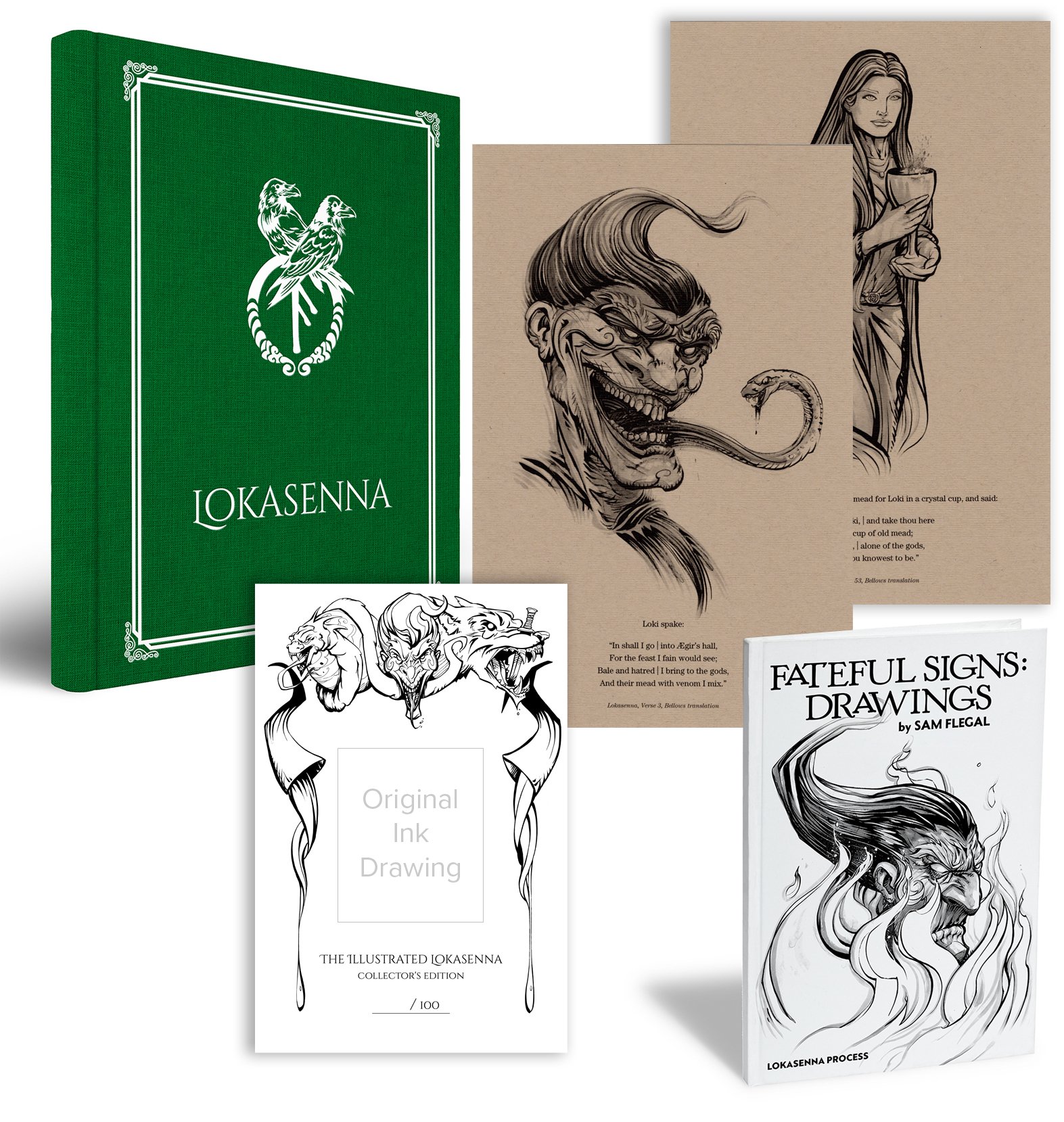
The Saga Edition includes:
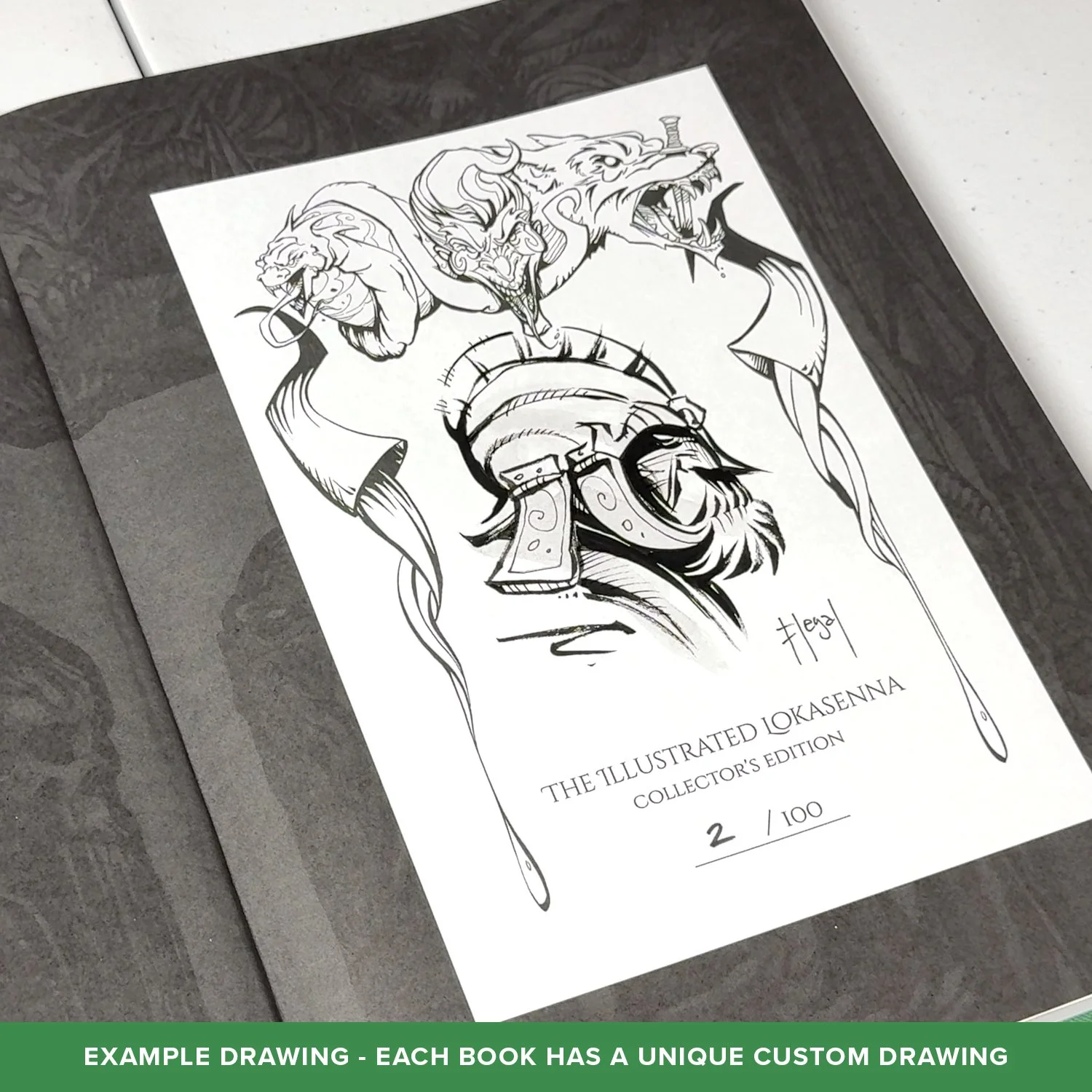
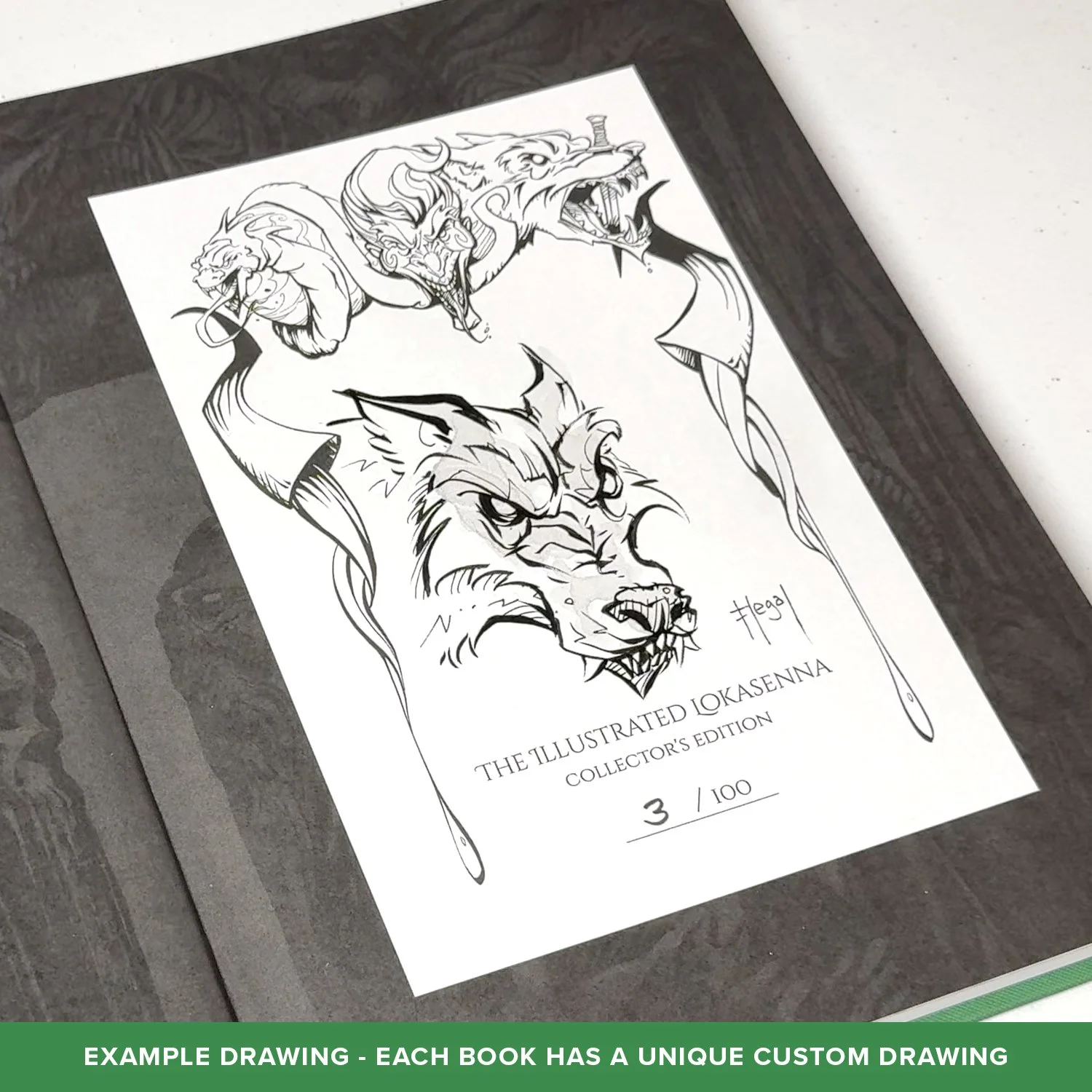
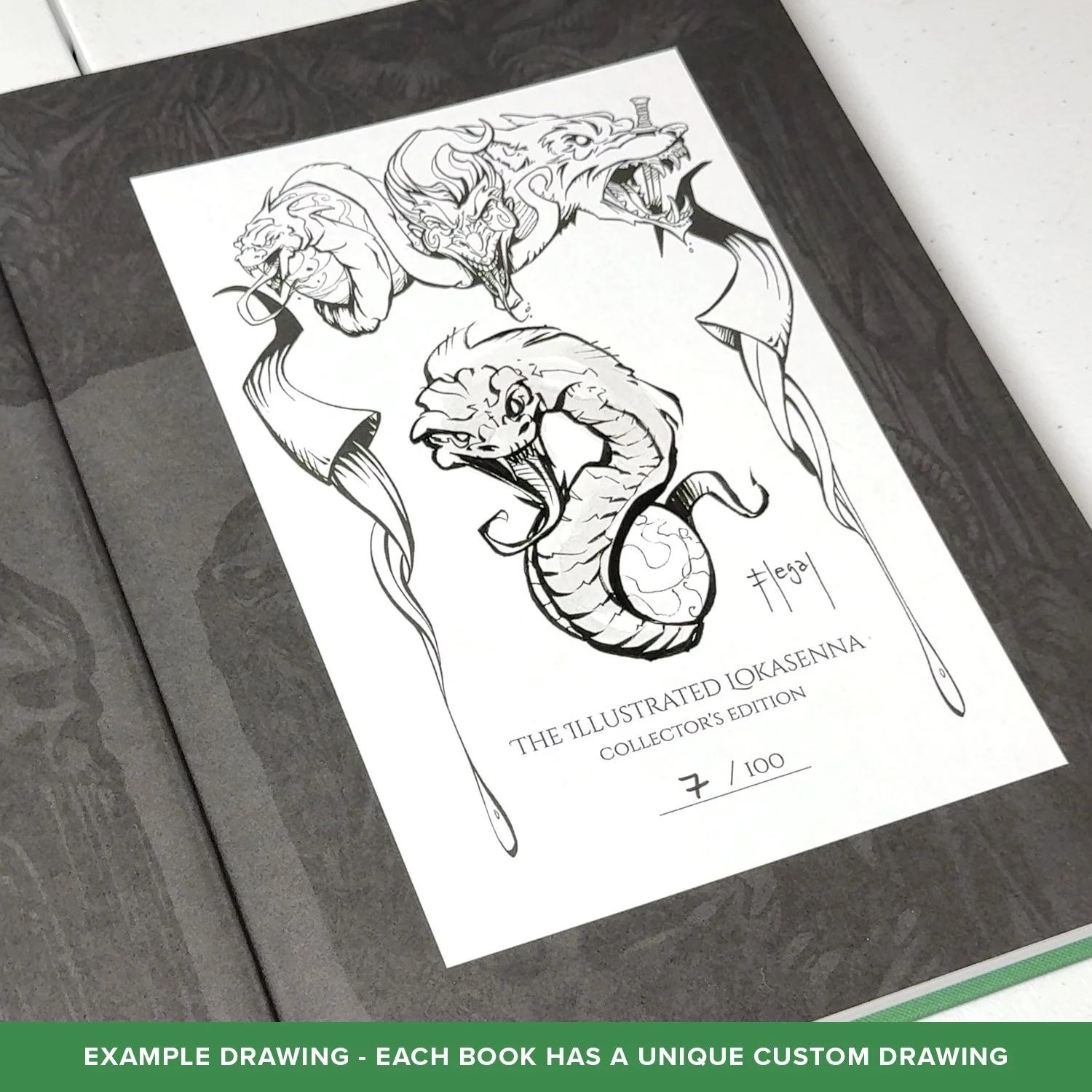
The Illustrated Lokasenna signed and numbered
Original Ink Drawing on the bookplate (inside cover)
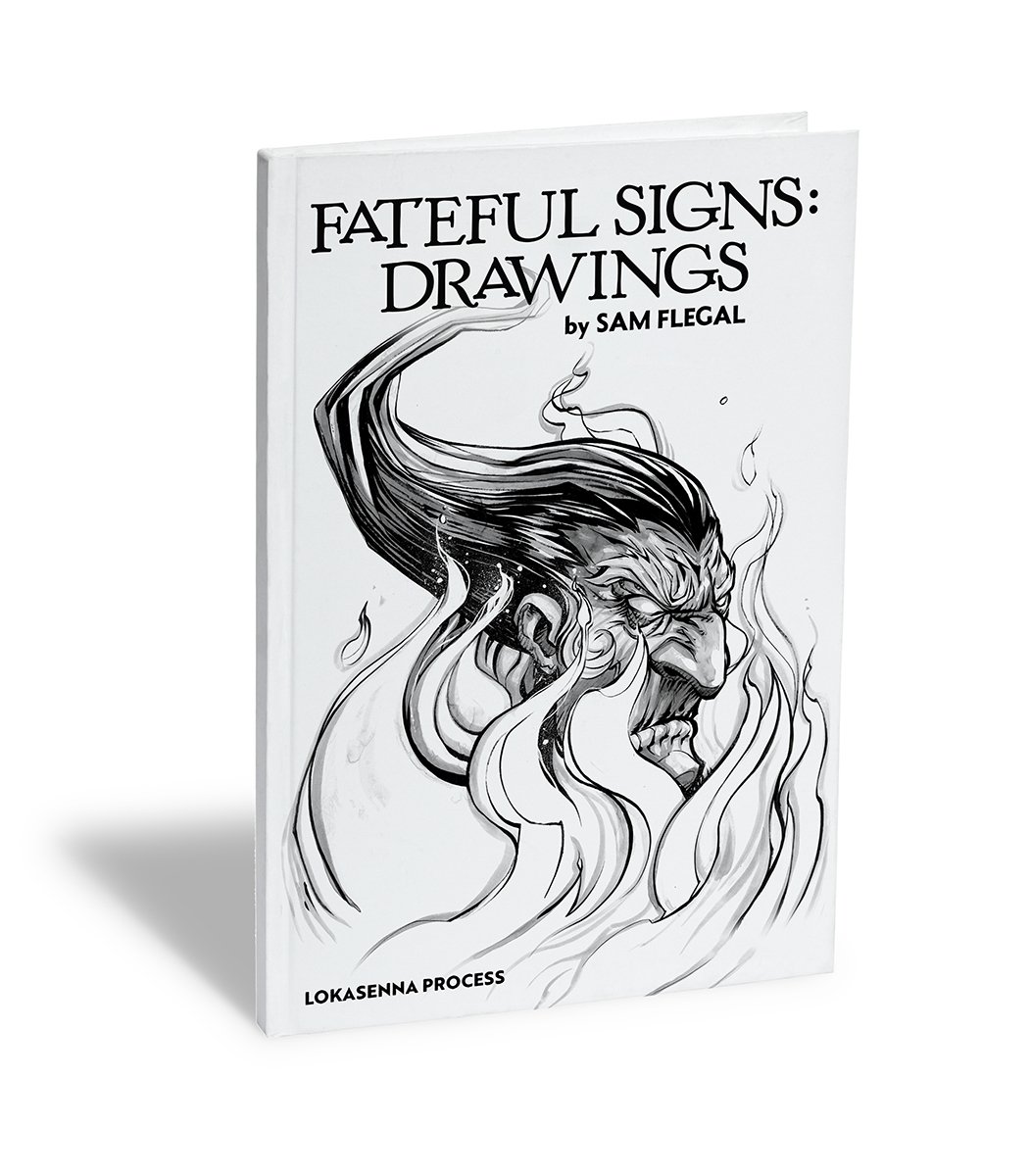
Fateful Signs: Drawings - Lokasenna Process
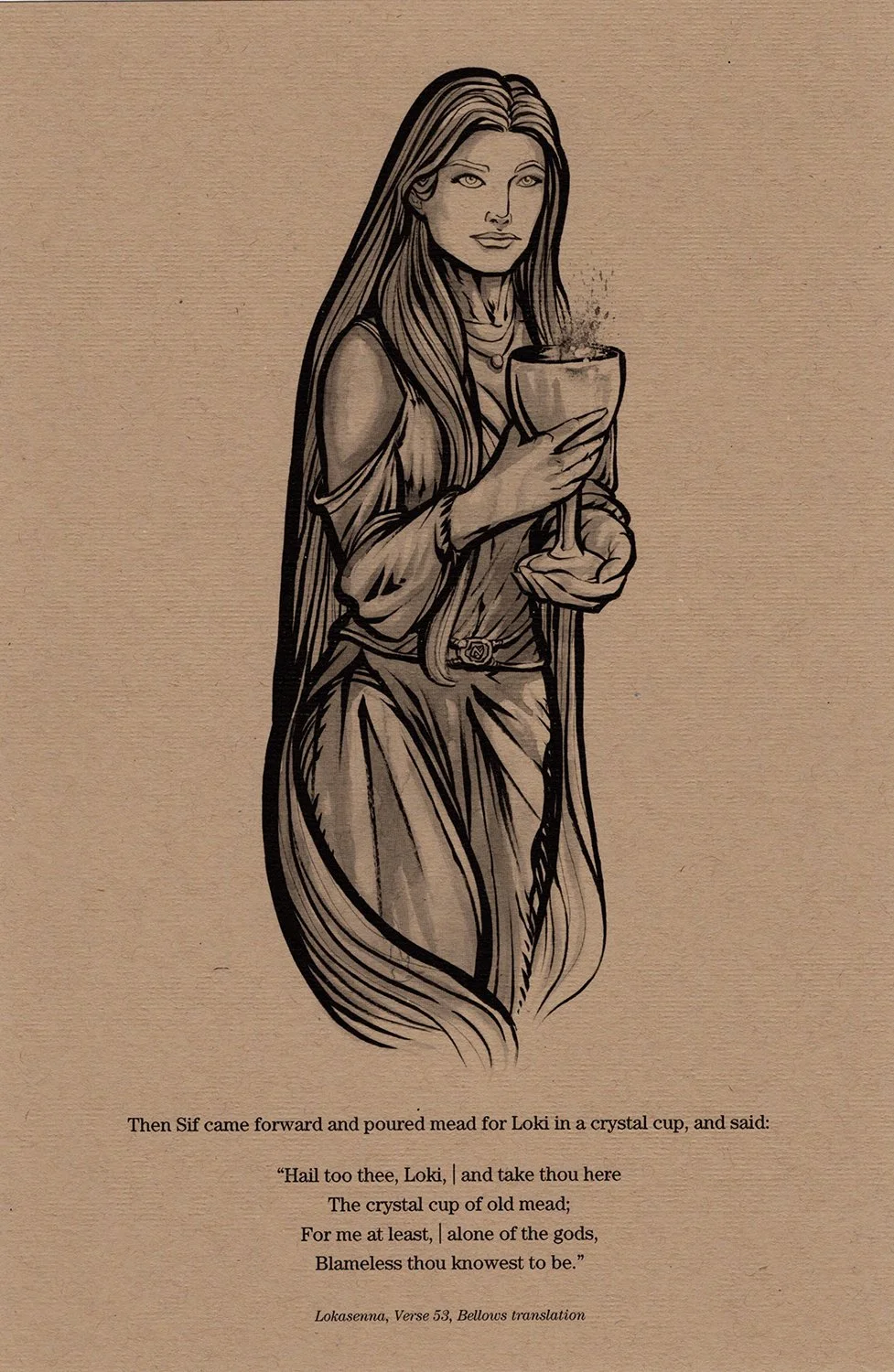
Blameless Sif - Print on Kraft Paper, 7.75” x 11.75”
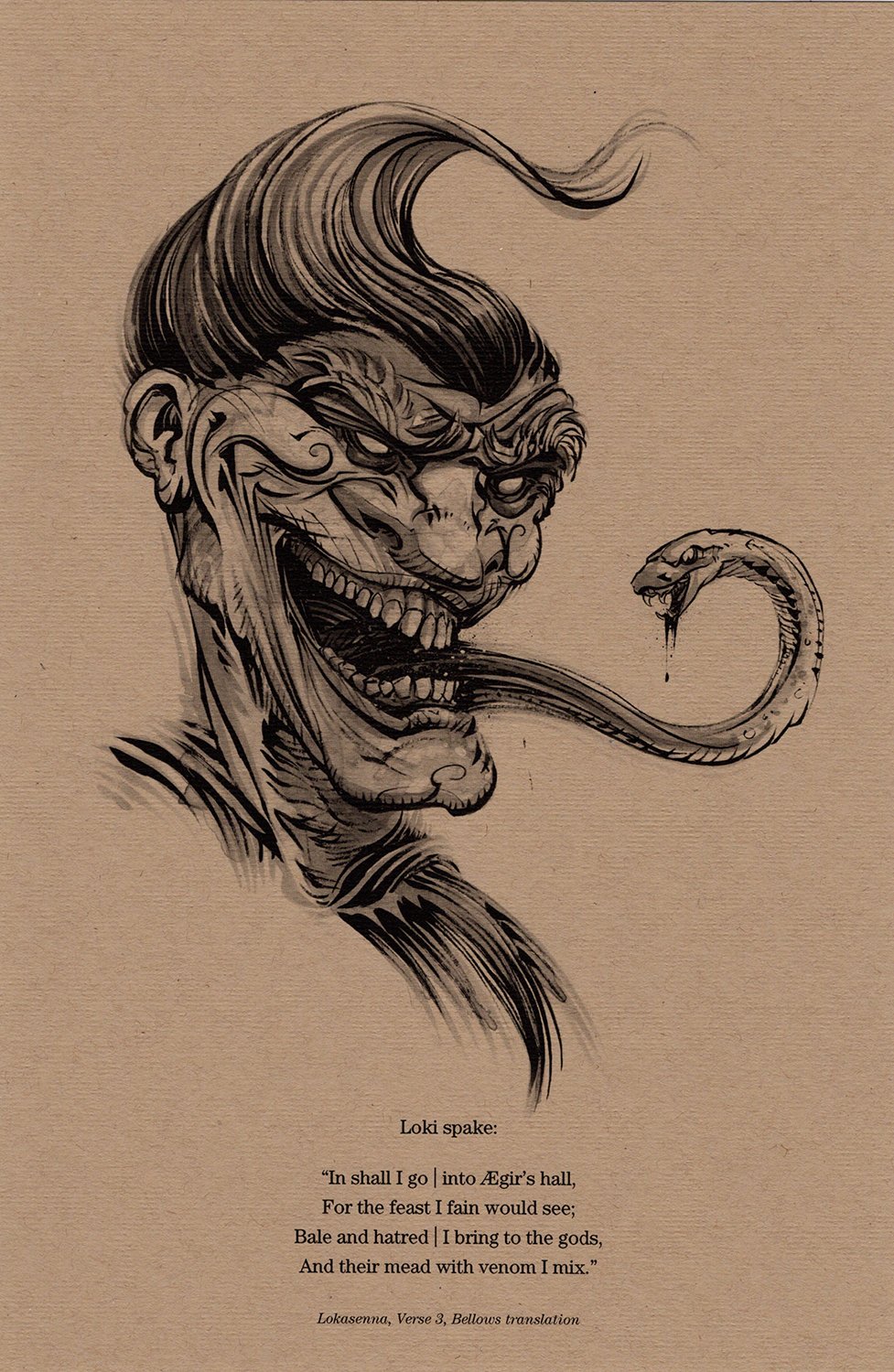
Loki’s Venom - Print on Kraft Paper, 7.75” x 11.75”
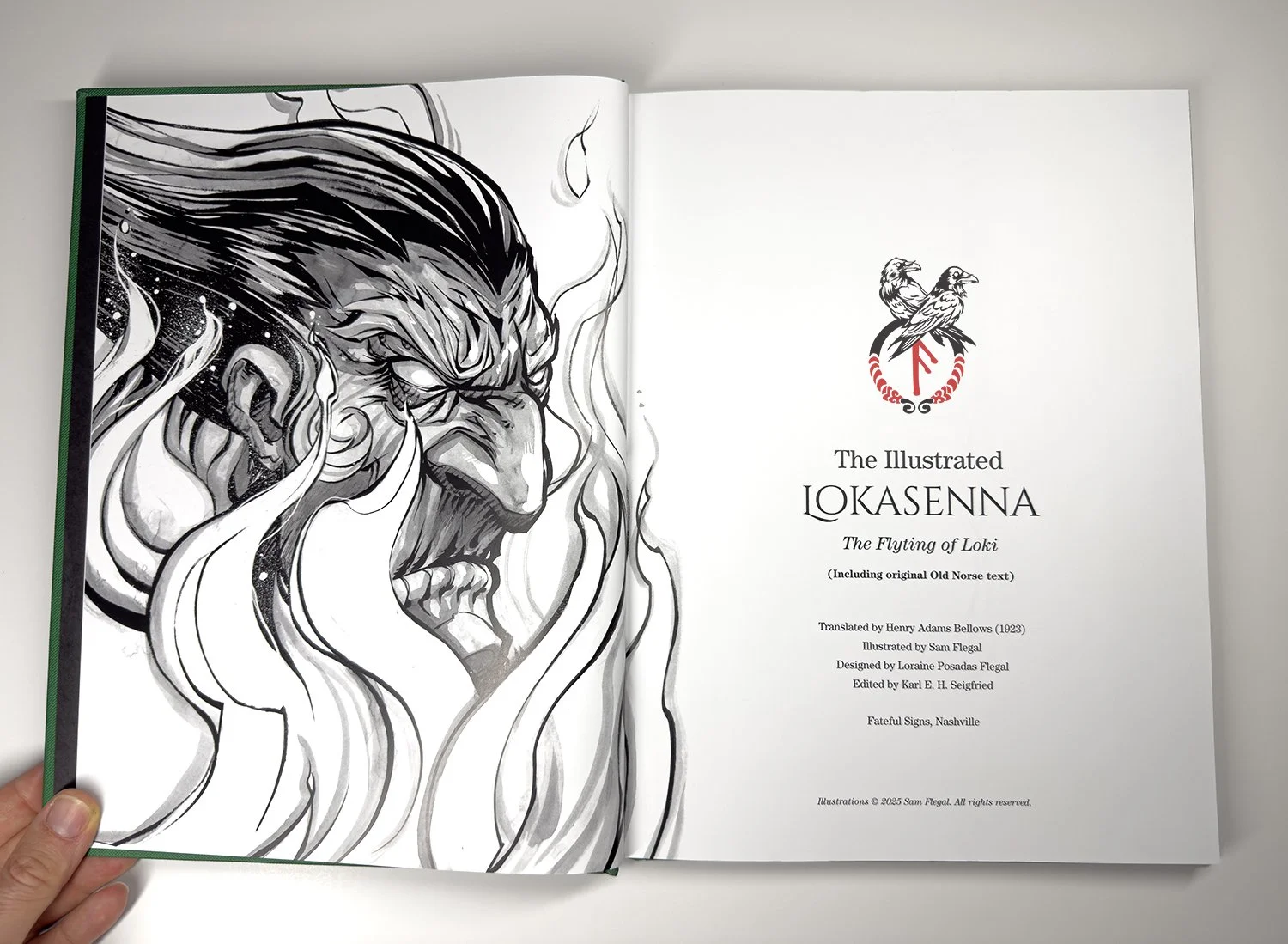
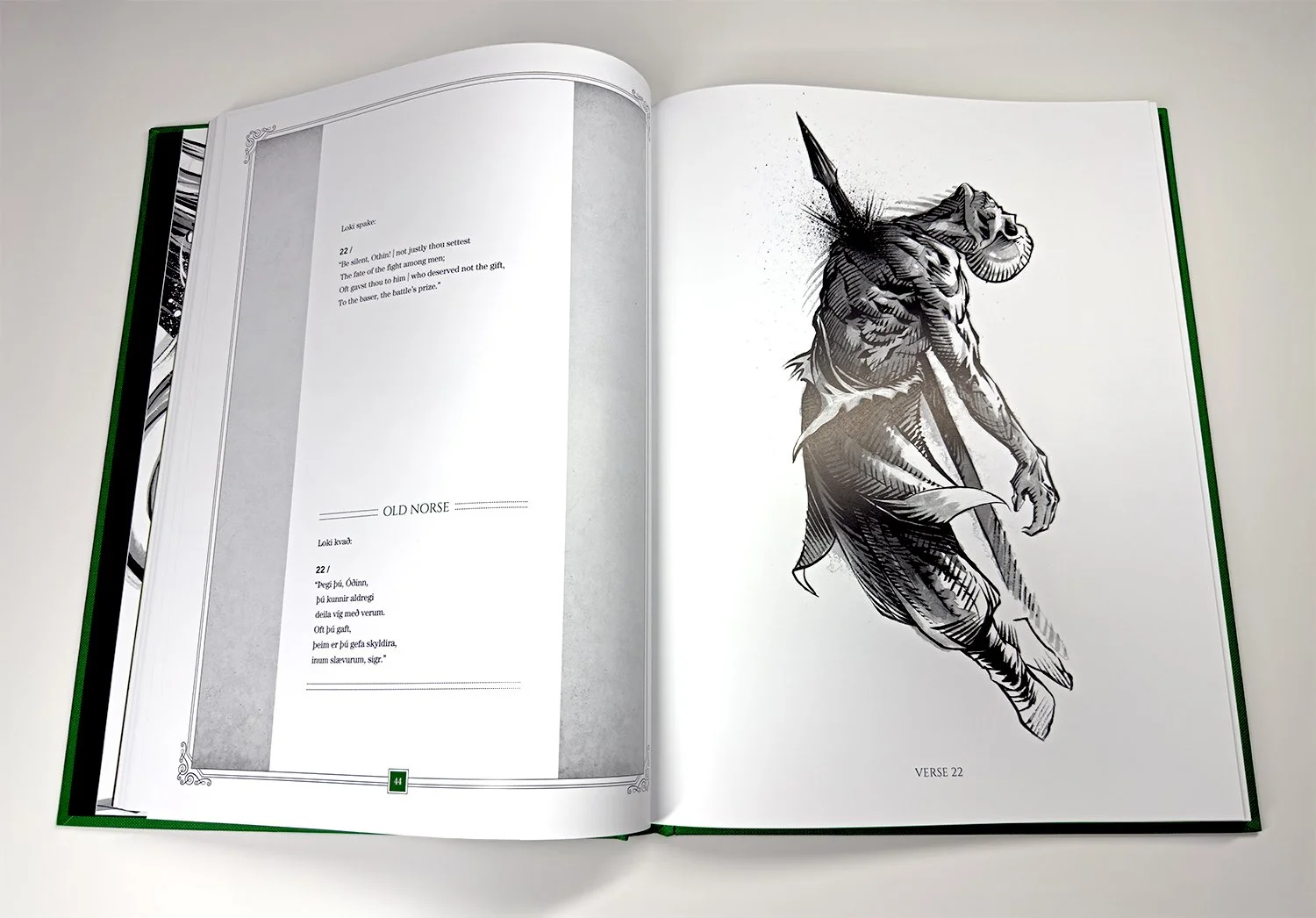
Fateful Signs presents "The Illustrated Lokasenna," a collection of art by Sam Flegal. This 138-page book explores the meaning behind the ancient collection of Norse poems where Loki's verbally fights with the gathered gods and elves. Rooted deep in ancient poetry and the Viking tradition of verbal dueling called "Flyting” and brought to life with meditative ink drawings.
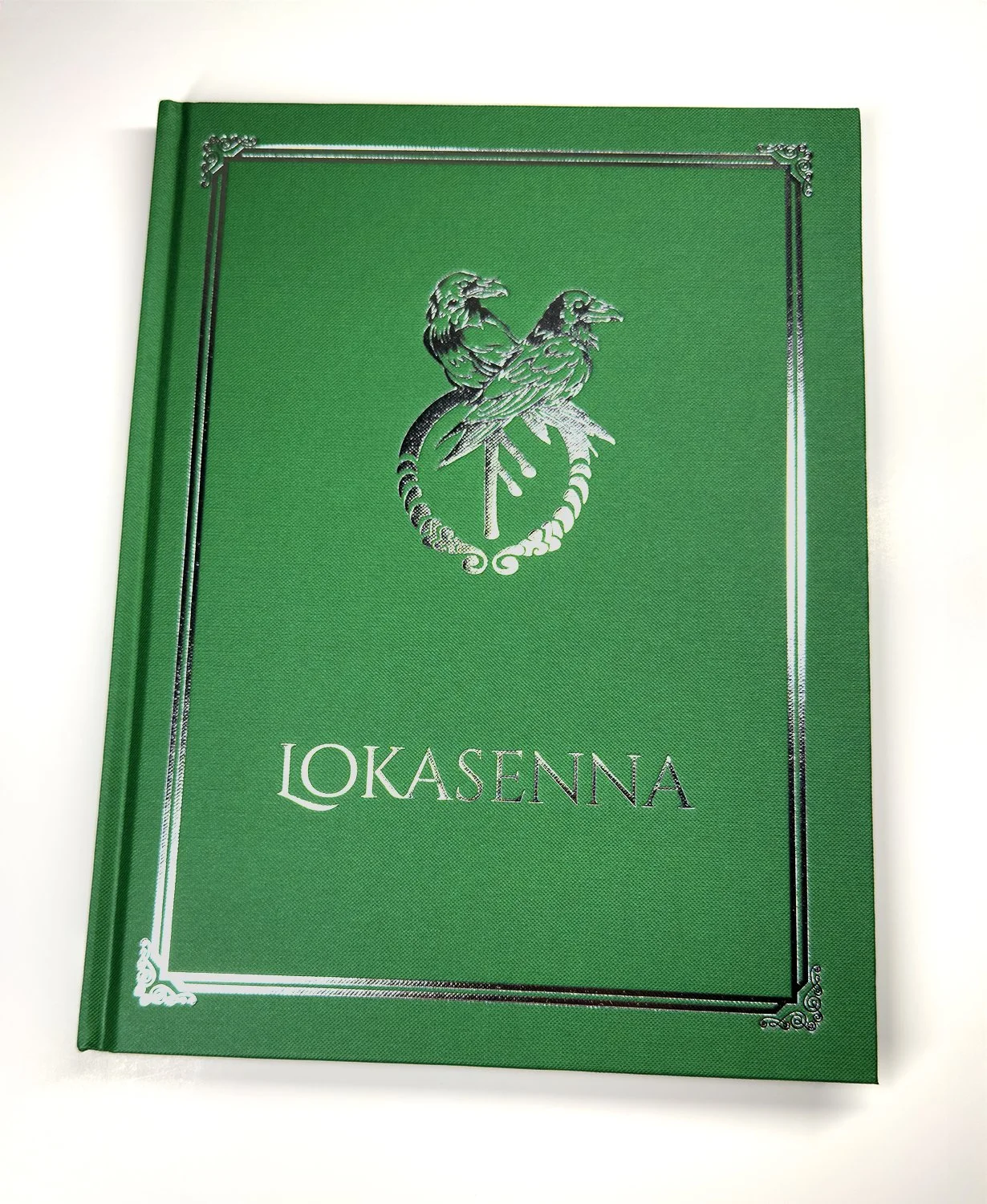
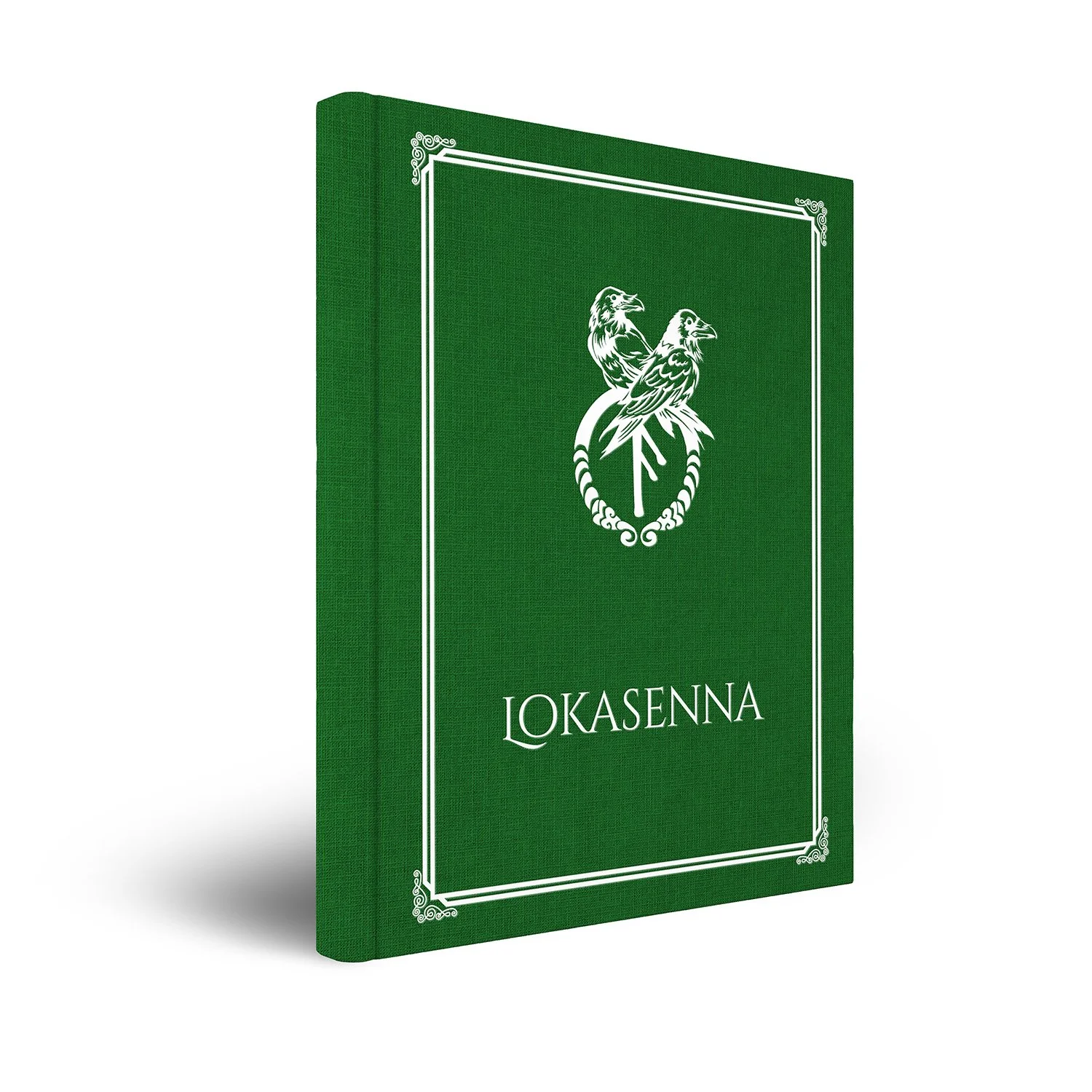
"The Illustrated Lokasenna" is a cloth-bound hardback book, measuring 9" x 12", with a silver foil embossed cover, containing 138 pages with 66 illustrations and the complete text from the "Lokasenna" as translated by Henry Adams Bellows, including his notes, and the original Old Norse language text.
Each copy of the Saga Edition Illustrated Lokasenna is signed and numbered and includes an Original Ink Drawing on the bookplate. The Saga Edition is limited to 100 copies.
“Fateful Signs: Drawings - Lokasenna Process” is a paperback book, measuring 6" x 9" book. It contains 60 pages filled with the initial "ink blobs" and the final ink drawings for many of the illustrations created for "The Illustrated Lokasenna." It also includes a detailed description of Sam Flegal's process for the creation of the Lokasenna ink drawings.


Tell me more about the Lokasenna
The "Lokasenna" is a collection of ancient Norse poems, believed to have been written down sometime in the 10th Century. Within its verse, Loki gets drunk and starts a "flyting," which is a poetry battle not unlike a modern epic rap battle or a comedy roast done in poetry. During this flyting, Loki reveals the hidden scandals and secret gossip of the various gods and goddesses. Scholars continue to debate whether his accusations should be taken seriously or seen as mere mischief.
Why the Bellows Translation?
The astute scholar of ancient Norse wisdom will note that there are many different translations of the "Lokasenna." This is not surprising, as a text this important draws many a scholarly pursuit. I chose the Bellows translation for two reasons. Firstly, the text is in the public domain. Many of the more modern and arguably more accurate translations are the creative property of their translators. Secondly, because Bellows translated with a mind towards poetry and rhythm of verse. After all, this is a collection of Old Norse poetry—the English language version should sound like poetry to give the reader the full experience of the text.
This is an art book, so I wanted the text to have an artistic poetic quality that some of the more academic translations lack.

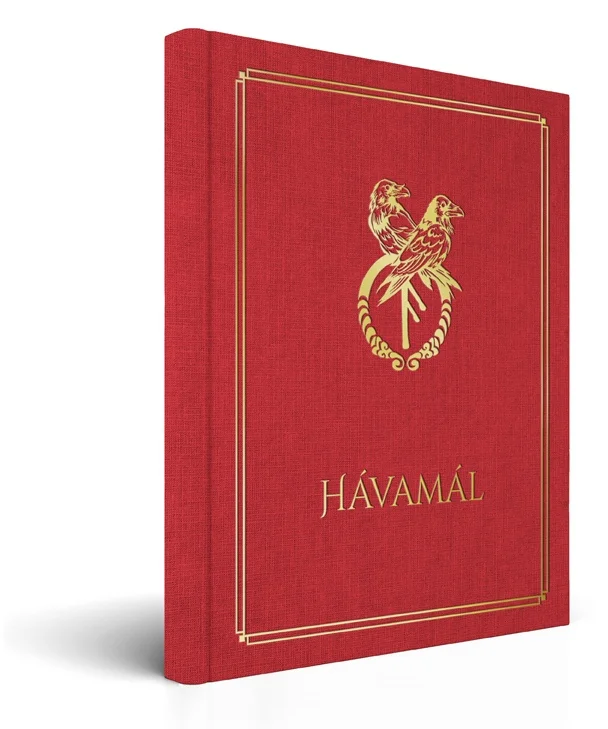

Fateful Signs presents "The Illustrated Lokasenna," a collection of art by Sam Flegal. This 138-page book explores the meaning behind the ancient collection of Norse poems where Loki's verbally fights with the gathered gods and elves. Rooted deep in ancient poetry and the Viking tradition of verbal dueling called "Flyting” and brought to life with meditative ink drawings.
"The Illustrated Lokasenna" is a cloth-bound hardback book, measuring 9" x 12", with a silver foil embossed cover, containing 138 pages with 66 illustrations and the complete text from the "Lokasenna" as translated by Henry Adams Bellows, including his notes, and the original Old Norse language text.